

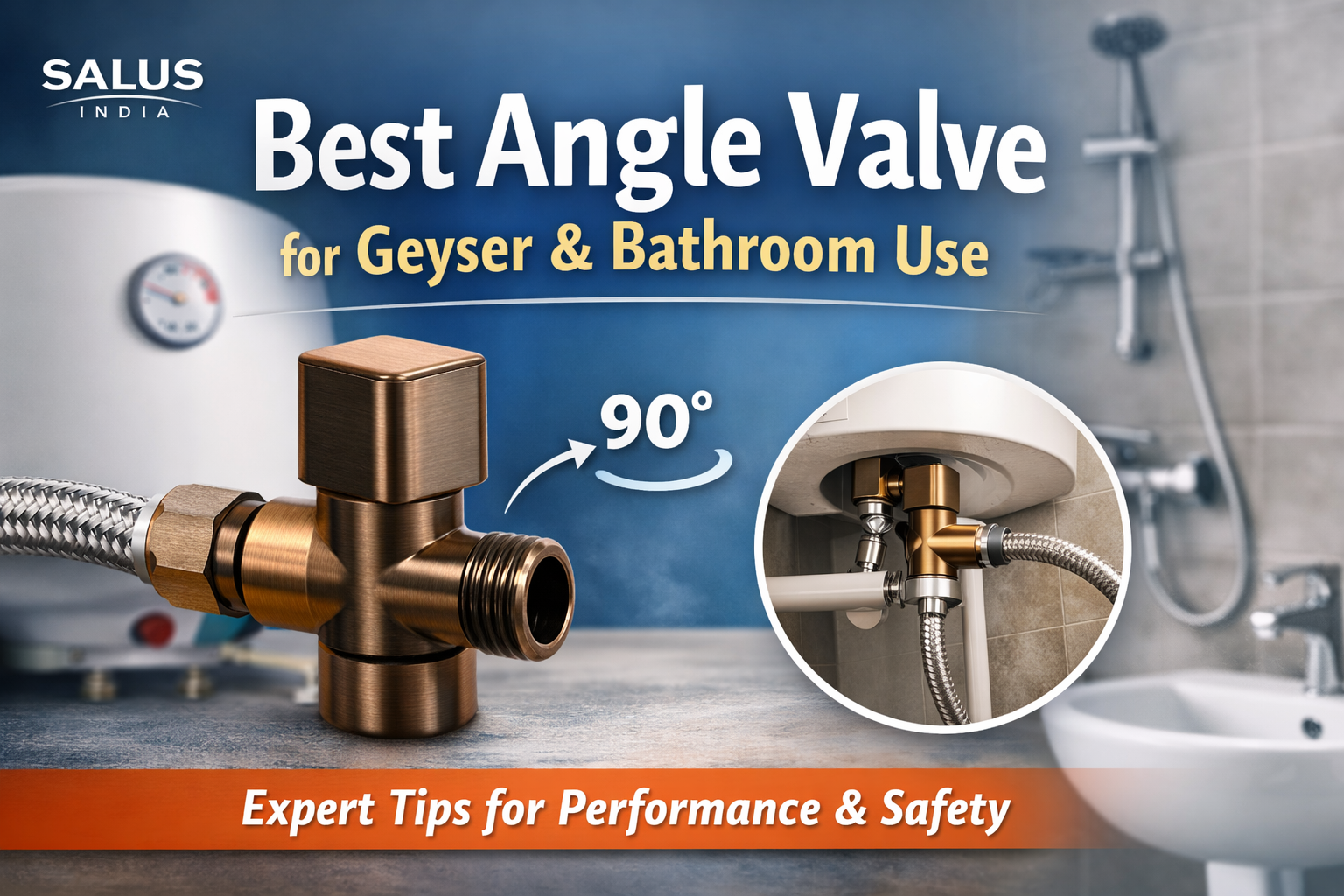
Installing the right angle valve is a small decision that makes a big difference, whether you're connecting a geyser or setting up a bathroom fixture. A quality valve ensures smooth operation, effective isolation of the water supply and protects your plumbing system. In this post, we'll look at what to consider, highlight the best angle valve for geyser applications, and explain how the valve's angle design affects performance and installation.
Why the Valve Angle and Quality Matter
The term valve angle refers to the orientation of the valve's inlet and outlet. Typically, the ports meet at a 90° angle. That layout enables a streamlined connection of the water supply from the wall to the fixtures.
When choosing an angle valve:
- Ensure the body is made of durable material (e.g., brass) for longevity and corrosion resistance.
- Verify the inlet-outlet orientation suits your installation (i.e., the correct valve angle) so that it fits neatly behind the fixture without strain or bending.
- Especially for a geyser, the water flow, temperature and safety considerations matter. Choosing the best angle valve for a geyser means selecting one designed for higher-temperature/higher-pressure applications.
The "All You Need to Know…" page by SalusIndia emphasises that an angle valve is not a minor part—it's fundamental to good plumbing design.
What to Prioritise When Selecting Angle Valves
Before we dive into model suggestions, here are the key selection criteria:
- Material & Build Quality
Go for brass or stainless steel bodies – residential plumbing demands corrosion resistance and strong seals. The SalusIndia guide stresses longevity and avoiding leak-prone, cheap valves. - Correct Size & Connection
Match the valve size to your pipeline (e.g., ½″) and ensure the threads and outlet match your fixture or geyser connection. - Valve Angle & Orientation
A true angle valve has a 90° change in direction, ideal for installations behind basins, toilets, and geysers where space is limited. The valve angle must align with your plumbing layout to avoid awkward bends or stress on flexible hygiene hoses. - Geyser-Suitable Specifications
For geysers, ensure the valve can handle hot water and pressure spikes, and that it has a strong cartridge or shut-off mechanism. Thus, pick the best angle valve for geyser rather than a basic one meant only for mixers or basins. - Ease of Maintenance / Servicing
A model that allows you to isolate the fixture or geyser without shutting the whole system is a major plus – a core benefit of using an angle valve.
Top Models from SalusIndia to Consider
Based on the internal links on the SalusIndia website and their angle-valve category, here are recommended models that match quality criteria:
- SalusIndia Angle Valve – Kingston Series (Brass body with a Venetian Bronze finish)
- Ideal for bathrooms where aesthetics matter. The 90° valve angle suits installations behind fixtures, and the premium finish makes it a strong choice where form and function matter.
- SalusIndia Angle Valve – Brushed Rose Gold Finish – another variant in their catalogue.
- Good for designers and high-end bathrooms. When used with a geyser, this aesthetic valve can still meet functional needs, provided the specification supports hot water, the material, and the build count.
These models are part of the broader "Angle Valve" product category on SalusIndia:
If you're specifically looking for the best angle valve for a geyser, pick one with a strong brass body, a reliable shut-off mechanism, and the correct size/outlet for the geyser connection. The above models fulfil many of those criteria; they are branded, quality-oriented and sold by a specialist supplier.
Bathroom vs Geyser Use – What Changes?
- Bathroom basin/toilet use: Here, the requirement is regular usage, moderate pressure, often cold/hot separate supplies; the valve angle and ease of access matter more than extreme pressure rating.
- Geyser use: Here, you are dealing with hot water and sometimes higher pressure, so you may need to isolate the water supply when maintaining the geyser. The best angle valve for geyser must therefore be rated for hot water, have a dependable shut-off, and suit the connection (often a flexible hose to the geyser). The 90° valve angle still works well behind the fixture or in tight spaces.
In both cases, the overarching philosophy from SalusIndia's content is the same: "quality counts, the valve may be small, but its failure can have big consequences."
Installation & Maintenance Tips
- Always check that the valve's outlet aligns with your fixture's hose or pipe; avoid forcing connections at awkward angles, and let the valve angle match the plumbing layout.
- Before installing your geyser, turn off the main supply, install the angle valve, and test that the shut-off is complete. This ensures safety.
- Periodically operate the valve (especially under the geyser) to make sure it hasn't seized; a stuck valve might fail when you need it most.
- If you spot corrosion, a leak, or a weak shut-off at the angle valve, replace it promptly, especially in geyser installations, where damage from hot leaks could be significant.
Conclusion
Selecting the right angle valve is about more than fitting the cheapest part—it's about matching the valve angle, build quality, and suitability for your fixture (be it basin or geyser). For those installing or upgrading a geyser, investing in the best valve angle for geyser use means fewer worries and better performance down the line.
From the SalusIndia catalogue, the Kingston Series and the Rose Gold variant are sound picks that combine aesthetics and functionality. Link them to the broader guide, "All You Need to Know About Angle Valves for Bathrooms," on their site for deeper reference.
By choosing wisely, you're not just installing a plumbing accessory; you're safeguarding your home's performance and design for years to come.