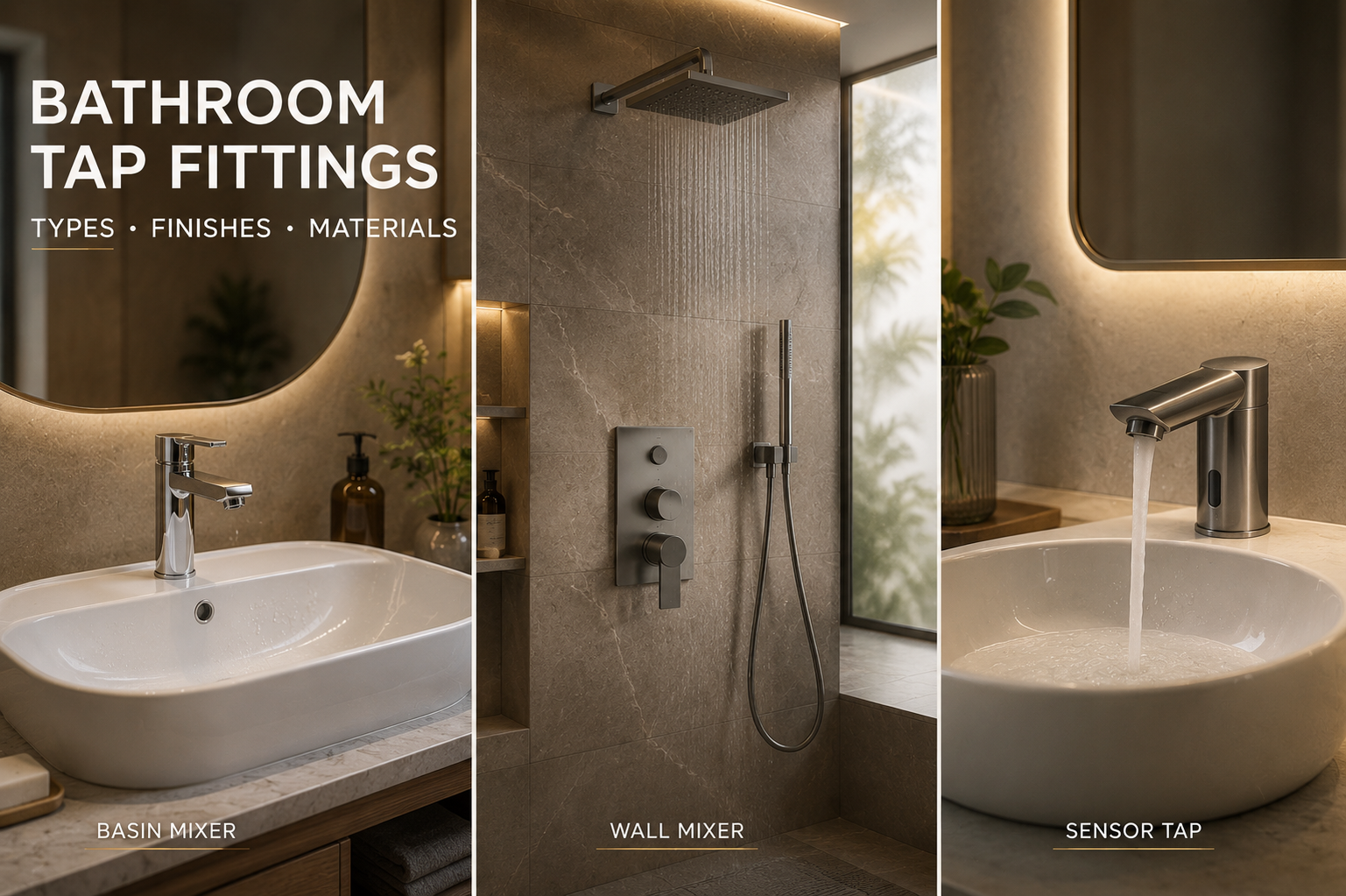
India’s bathroom accessories market is set to more than double, from USD 1.5 billion in 2024 to USD 3.3 billion by 2030. A surprising share of that spend goes into one small detail: bathroom tap fittings. The right tap decides how your basin looks, how much water you save, and how well your bathroom survives Mumbai’s hard water. This guide covers every major tap type, finish and material, with realistic INR price ranges and buying tips for Indian homes in 2026.
Table of Contents
- Types of Bathroom Tap Fittings for Indian Homes
- Finishes That Will Define Bathrooms in 2026
- Materials: Why Brass Still Wins
- Bathroom Tap Price Guide in INR
- Seven Buying Tips Before You Pay
- Installation and Care in Hard Water Cities
1. Types of Bathroom Tap Fittings for Indian Homes
Indian bathrooms mostly use five tap formats. The right one depends on your basin position, your plumbing layout, and how much hardware you want hidden inside the wall.
| Tap Type | How It Works | Best For |
| Pillar tap | Single cold-water line, deck-mounted | Budget bathrooms, utility areas |
| Basin mixer | Blends hot and cold through one spout | Daily-use family bathrooms |
| Wall mixer | Wall-mounted, feeds spout and shower | Combined bath and shower zones |
| Concealed diverter | Valve body sits inside the wall | Premium bathrooms, clean wall look |
| Sensor tap | Infrared, touch-free operation | Powder rooms, guest bathrooms |
Pillar taps remain the entry point, but single-lever basin mixers now dominate new Mumbai apartments because one smooth movement controls both temperature and flow. Wall mixers serve bathing zones, while a concealed diverter routes water invisibly between an overhead shower, a hand shower and a spout.
A diverter setup only looks complete when you pair it with matching shower and bath accessories such as rails, arms and drain covers. Before you shortlist anything, compare all five formats side by side in a curated collection of bathroom faucets and taps; spout shapes vary far more than most buyers expect.
2. Finishes That Will Define Bathrooms in 2026
Chrome ruled Indian bathrooms for three decades. In 2026, matte and brushed finishes are taking over because they hide water spots and sit beautifully in the earthy, nature-inspired palettes designers now prefer.
| Finish | Character | Hard Water Behaviour |
| Polished chrome | Mirror shine, classic | Shows spots fastest |
| Matte black | Bold, architectural | Hides spots well |
| Brushed nickel | Soft, warm grey | Hides spots and fingerprints |
| Brushed gold | Quiet luxury | Hides spots, demands PVD quality |
| Gunmetal | Deep contemporary grey | Hides spots well |
Ask how the colour is applied before you pay for it. PVD (Physical Vapour Deposition) bonds the finish into the metal and survives years of cleaning, while cheap electroplating or spray coats peel quickly in humid coastal air.
Finish choice also shapes mood. Designers increasingly treat the bathroom as a recovery space, and writing on how your bathroom can boost daily wellness explains why calm, warm tones are steadily replacing clinical white and silver.
3. Materials: Why Brass Still Wins
The finish is what you see. The material underneath is what you live with for the next fifteen years. Four materials dominate the Indian market:
- Brass: the gold standard. Heavy, corrosion resistant, machinable and repairable for decades.
- Stainless steel (304 grade): excellent in humid coastal cities, fully lead-free, slightly narrower design range.
- Zinc alloy: looks identical on day one, then pits and snaps at stress points within a few years.
- ABS plastic: acceptable for shower heads and spare parts, never for tap bodies.
Quick fact: Quality tap bodies contain roughly 57 to 63 percent copper. That copper makes brass naturally corrosion resistant and antimicrobial, which is why a well-made brass tap in Indian water conditions often outlasts the bathroom around it.
Pick the tap up before buying. A genuine brass basin mixer weighs 1.5 to 2.5 kg, while a zinc-alloy lookalike feels hollow. Then ask about the cartridge, the small ceramic disc unit inside the handle: it decides whether the lever still glides smoothly in year ten.
4. Bathroom Tap Price Guide in INR
Tap prices in India stretch from a few hundred rupees to more than a lakh. Here is what realistic 2026 budgets look like:
| Tap Type | Budget | Mid-Range | Premium Imported |
| Pillar tap | ₹500 to ₹1,500 | ₹1,500 to ₹4,000 | ₹4,000 to ₹12,000 |
| Basin mixer | ₹2,000 to ₹5,000 | ₹5,000 to ₹15,000 | ₹15,000 to ₹60,000 |
| Wall mixer | ₹2,500 to ₹6,000 | ₹6,000 to ₹18,000 | ₹18,000 to ₹75,000 |
| Concealed diverter set | ₹4,000 to ₹10,000 | ₹10,000 to ₹30,000 | ₹30,000 to ₹1.5 lakh |
| Sensor tap | ₹6,000 to ₹12,000 | ₹12,000 to ₹25,000 | ₹25,000 to ₹80,000 |
So what pushes a tap into the premium bracket? Thicker brass castings, branded 35 mm cartridges tested for five lakh operating cycles, PVD finishes and honest flow regulators. Imported bathroom tap fittings cost more upfront, yet they usually work out cheaper per year of service.
Budget for labour too. Mumbai plumbers typically charge ₹400 to ₹800 per tap point, and concealed diverters need tiling work planned well in advance.
5. Seven Buying Tips Before You Pay
Every tap looks convincing on a showroom wall. These checks separate a fifteen-year purchase from a two-year regret:
- Settle the cartridge question first. Insist on a ceramic disc cartridge, ideally a branded 35 mm unit with spares available locally.
- Match the tap to the basin. A tall spout over a shallow bowl splashes every morning. Shortlist your wash basin range and taps together so heights and reach align.
- Confirm 1/2 inch BSP threads. This is the Indian plumbing standard; imported fittings should state BSP compatibility on the box.
- Check the flow rate. Aerated taps flowing at 6 to 8 litres per minute feel full yet cut water use nearly in half.
- Pick the finish by water quality. Hard water households should lean brushed or matte, since polished chrome demands daily wiping.
- Read the warranty line by line. Good brands back brass bodies for 7 to 10 years and cartridges for at least 5.
- Decide taps early, not last. Concealed fittings go in before the tiles do. A structured bathroom renovation guide helps you sequence these calls correctly.
Pro tip: Buy every tap in the house from one brand series and one finish family. Cartridges stay interchangeable, finishes age evenly, and your bathroom tap fittings read as one designed decision instead of five separate purchases.
6. Installation and Care in Hard Water Cities
Municipal supply across Mumbai and Navi Mumbai runs moderately hard, and borewell top-ups in many housing societies push mineral levels higher still. Salt-heavy monsoon air adds its own corrosion load. In these conditions, care matters as much as choice.
- Use thread sealant tape on every 1/2 inch BSP joint, and never overtighten brass into metal fittings.
- Wipe fittings dry after heavy use, especially polished chrome.
- Unscrew aerators monthly and soak them in a mild vinegar solution to clear scale.
- Keep acid-based toilet cleaners away from tap surfaces; they eat through any finish.
- Service cartridges and angle valves once a year, ideally before the monsoon.
Ten minutes a week protects a fitting built to last twenty years. For a full schedule, follow this bathroom fittings maintenance routine covering cleaning, descaling and annual check-ups.
Frequently Asked Questions
Q1. Which material is best for bathroom taps in India?
Brass remains the most reliable material for Indian water conditions. It resists corrosion from chlorine and dissolved salts, holds threads firmly, and carries PVD finishes well. Stainless steel 304 also performs strongly in coastal, humid cities like Mumbai. Avoid zinc alloy or plastic-bodied taps for daily-use bathrooms; they pit, leak and rarely last beyond three to four years.
Q2. How much do bathroom tap fittings cost in India?
Entry-level pillar taps start around ₹500 to ₹1,500. Mid-range single-lever basin mixers with ceramic cartridges cost ₹5,000 to ₹15,000. Premium imported basin mixers and concealed diverter sets range from ₹15,000 to ₹1.5 lakh depending on brand, finish and cartridge technology. Budget roughly ₹25,000 to ₹80,000 for complete tap fittings in one full bathroom.
Q3. Are matte black taps difficult to maintain?
No, provided you buy PVD-coated matte black rather than cheap powder-coated versions. PVD bonds the colour at a molecular level, so it resists scratches, fading and daily cleaning. Wipe with a soft cloth and mild soap only. Avoid acidic bathroom cleaners and scrubbing pads, which dull any finish. Matte surfaces actually hide hard water spots better than glossy chrome.
Q4. What size are bathroom tap connections in India?
Indian bathroom plumbing follows the 1/2 inch BSP (British Standard Pipe) thread standard for taps, mixers, angle valves and connection hoses. Almost every domestic tap sold in India uses it, so replacements fit existing lines without rework. Kitchen and inlet lines occasionally use 3/4 inch BSP, so confirm the thread size printed on the box before buying.
Q5. How do I protect taps from hard water in Mumbai?
Wipe fittings dry after use so minerals never crystallise on the surface. Soak aerators in a mild vinegar solution once a month to clear deposits, and clean tap bodies with soap water only. Skip acid-based cleaners near taps because they strip chrome and PVD coatings. In borewell-supplied societies, a water softener meaningfully extends fitting life.
Q6. What is the difference between a pillar tap and a basin mixer?
A pillar tap connects to a single water line, usually cold, and suits budget bathrooms or standalone basins. A basin mixer blends hot and cold water through one spout, controlled by a single lever or two handles. Mixers cost more and need both supply lines at the basin, but they deliver comfortable water temperature for daily use.
Q7. How long do good bathroom taps last?
A quality brass tap with a ceramic disc cartridge typically lasts 12 to 20 years in Indian conditions. The cartridge wears first, usually after 8 to 10 years, and costs only a few hundred rupees to replace. Finish life depends on care: PVD coatings stay intact for over a decade, while cheap electroplating can peel within three years.
Choose Once, Choose Well
Great bathrooms are decided in the details, and bathroom tap fittings are the detail you touch every single day. Prioritise brass bodies, ceramic cartridges and PVD finishes over trend-of-the-month looks, and your 2026 renovation will still feel premium in 2040. Explore imported designer taps, basins and accessories at salusindia.com, or visit the Navi Mumbai showroom to experience the finishes in person.