

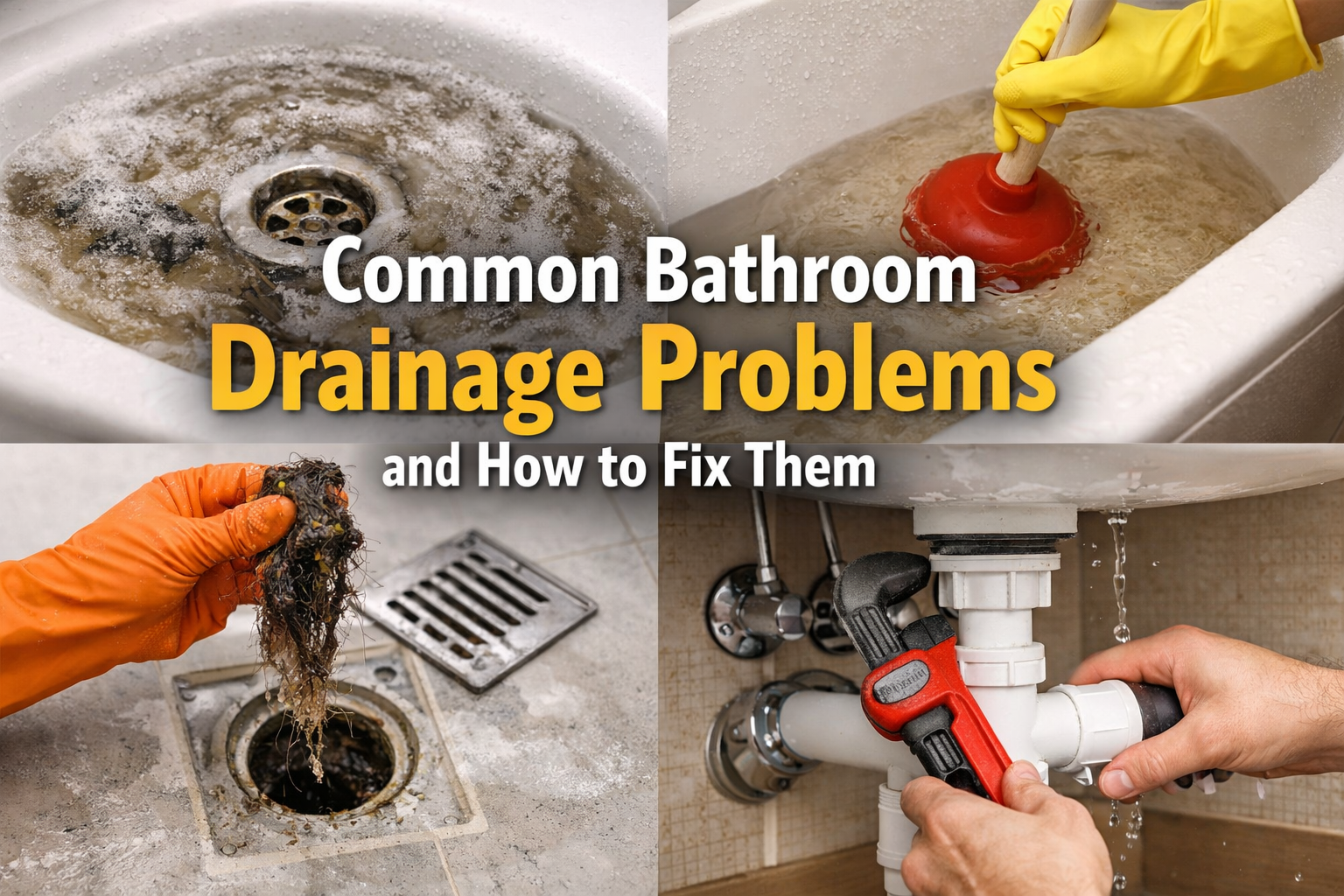
Bathroom drainage problems may seem minor at first, but they can quickly escalate into frustrating, expensive issues if ignored. Slow-draining water, unpleasant smells, blocked outlets, and standing water on the floor can affect the comfort, hygiene, and functionality of the entire space. In many homes, these problems build up gradually over time through daily use, poor maintenance, or unnoticed wear in the drainage system.
A well-functioning bathroom depends on more than just attractive fittings and a modern layout. Proper drainage is equally important because it helps keep the area clean, dry, and safe. When drains stop working efficiently, even a beautifully designed bathroom can become inconvenient to use.
Many homeowners focus on visible fixtures during maintenance but overlook the drainage system until a problem appears. Understanding the most common bathroom drainage issues and learning how to fix them can help prevent long-term damage and reduce repair costs.
Modern bathrooms are expected to balance convenience, hygiene, and efficient water flow. That is why early attention to drainage problems can make a big difference in maintaining a comfortable and practical space.
Slow Floor Drainage
One of the most common bathroom issues is slow floor drainage. This usually happens when hair, dust, soap residue, and small particles collect inside the drain and gradually restrict water flow. Even a partially blocked drain can cause water to remain on the floor for longer than usual.
Many homeowners now prefer installing durable floor drains in Mumbai homes because they are designed to support better water movement and long-term performance in wet areas. However, even good drains require regular cleaning to function properly.
A simple way to fix this issue is to remove visible debris from the drain opening and flush it with hot water. Repeating this regularly helps prevent buildup from turning into a major blockage.
Water Collecting in the Shower Area
Water pooling around the shower area is another common problem that affects daily comfort. This often happens when the drain cannot handle the water flow efficiently or when hair and soap residue begin to block the outlet.
In Mumbai homes, where showers use a shower head for stronger, more consistent water flow, efficient drainage becomes even more important. If the drain is partially blocked, water can begin collecting on the floor instead of draining smoothly.
The first step is to inspect the shower drain and remove any trapped hair or debris. If the problem persists, the drainage slope or the internal pipe condition may require professional inspection.
Wash Basin Drain Blockage
Wash basins are used multiple times a day, making them highly prone to clogging. Toothpaste, soap residue, hair, and skincare product buildup can accumulate inside the pipe, reducing water flow over time.
A frequently used wash basin in Mumbai homes should be cleaned and checked regularly to avoid complete blockage. Slow drainage from the basin is usually the first sign that buildup is forming inside the pipe.
Removing the drain cover and cleaning the visible dirt can often solve the issue in its early stages. Pouring warm water through the outlet also helps dissolve light residue and keep the pipe cleaner.
Unpleasant Smell from Bathroom Drains
Bad odour from bathroom drains is usually caused by trapped organic matter in the pipes. Hair, soap, and dirt can accumulate in the drain and break down, leading to bacterial buildup and unpleasant smells.
Many bathrooms now use bathroom shower drains in Mumbai systems with improved trap designs that help reduce odour issues. These systems are made to block gases from moving back up through the drain while still allowing smooth water flow.
Regular cleaning is one of the best ways to prevent smell-related issues. Flushing the drain with warm water and mild natural cleaners can help clear residue and improve freshness.
Clogged Drain from Hair and Soap Residue
Hair and soap residue are among the most common causes of bathroom drainage issues. Hair tends to bind with soap deposits, forming thick blockages that are difficult to remove if left untreated.
This problem becomes more noticeable in shower areas where water use is frequent and drainage is constant. If the blockage becomes deeper inside the pipe, water may drain very slowly or stop altogether.
Using a drain cover can help catch hair before it enters the pipe. Regularly cleaning it is a simple preventive habit that can save a lot of trouble later.
Rain Shower Drainage Problems
Rain showers create a premium bathing experience but also release a larger volume of water than standard fixtures. If the drainage system is not clean or efficient, this can quickly lead to water accumulation on the shower floor.
A well-maintained rain shower head in Mumbai homes can improve comfort, but it must be supported by proper drainage design. Without that, the water output may exceed the drain’s ability to remove it smoothly.
To fix this issue, the shower drain should be inspected regularly and kept free from blockage. Good maintenance ensures the rainfall effect remains enjoyable without creating drainage problems.
Improper Drainage Slope
Sometimes the issue is not a blockage but poor installation. If the bathroom floor or drainage pipe is not sloped correctly, water may not flow toward the outlet properly. Instead, it can collect in corners or remain on the floor.
This kind of issue is more common in poorly planned renovations or older bathrooms where the drainage system was not designed efficiently. Unlike simple clogs, slope-related problems usually require professional correction.
If water regularly pools in the same area despite a clean drain, this may be a sign of improper floor grading or pipe alignment.
Mineral Buildup Inside Pipes
In many homes, hard water can gradually leave behind mineral deposits in pipes and drainage fittings. Over time, these deposits narrow the path through which water moves, affecting the speed and efficiency of drainage.
Although this is not always visible from the outside, it can contribute to slow water flow and recurring blockages. This is especially common in heavily used bathrooms.
Periodic cleaning and professional inspection can help identify and manage mineral buildup before it affects the full drainage system.
Importance of Durable Fittings
A reliable drainage system also depends on the quality of the fixtures and fittings installed in the bathroom. Poor-quality components can wear out faster, corrode in moisture-heavy environments, or fail to support efficient drainage over time.
That is why many homeowners choose dependable bathroom fittings that Mumbai suppliers provide when planning upgrades or renovations. Quality fittings improve long-term performance and reduce the chances of recurring drainage issues.
Better materials and well-designed systems can make daily bathroom use smoother and more dependable.
Simple Ways to Prevent Drainage Problems
Prevention is always easier than repair when it comes to bathroom drainage. A few simple habits can help avoid common issues and keep the system functioning properly.
Homeowners should regularly:
- remove visible hair and debris from drain covers
- Flush drains with hot water
- Avoid letting thick residue enter the outlet.
- Inspect slow-draining water early.
These habits help maintain a clean and efficient system while reducing the need for costly repairs.
When to Call a Professional
Some drainage problems can be fixed with simple cleaning, but deeper clogs or installation issues may need expert help. If water continues to drain slowly after cleaning, or if bad smells and blockages keep returning, the problem may be inside the pipe network.
Professional inspection helps identify hidden issues such as deep blockages, poor slope, damaged pipes, or long-term buildup. Getting the problem checked early can prevent more serious damage later.
Conclusion
Bathroom drainage problems are common, but they should never be ignored. Slow water flow, drain odour, blockages, and standing water often begin as small issues and gradually become bigger concerns when left untreated. Regular cleaning, better maintenance habits, and early attention can prevent most of these problems.
A clean, efficient drainage system supports hygiene, comfort, and the long-term performance of the bathroom. When homeowners understand the causes of common drainage problems and take simple steps to fix them, they can keep the space functional and hassle-free.
Frequently Asked Questions
1. What is the most common bathroom drainage problem?
The most common issue is slow drainage caused by hair, soap residue, and small debris collecting inside the pipe. This buildup restricts water flow and eventually creates a blockage. Regularly cleaning the drain helps prevent this problem.
2. Why does water collect in the shower area?
Water usually collects in the shower area when the drain is partially blocked or when the floor slope does not properly guide water toward the outlet. Hair and soap residue are often the main reasons. Regular drain cleaning can help improve the flow.
3. How can the bad smell from bathroom drains be removed?
Bad smells usually come from organic matter trapped in the drain. Flushing with warm water and cleaning the drain opening can help remove the buildup. If the smell continues, the trap or internal pipe may need inspection.
4. Can bathroom drainage problems damage the floor?
Yes, repeated water accumulation can affect bathroom flooring and, over time, lead to moisture damage. It may also create slippery surfaces and hygiene issues. Fixing drainage problems early helps avoid these risks.
5. How often should bathroom drains be cleaned?
Bathroom drains should be checked and cleaned every few weeks, depending on usage. In homes with frequent use, more regular cleaning may be needed. A simple routine can prevent major blockage problems.