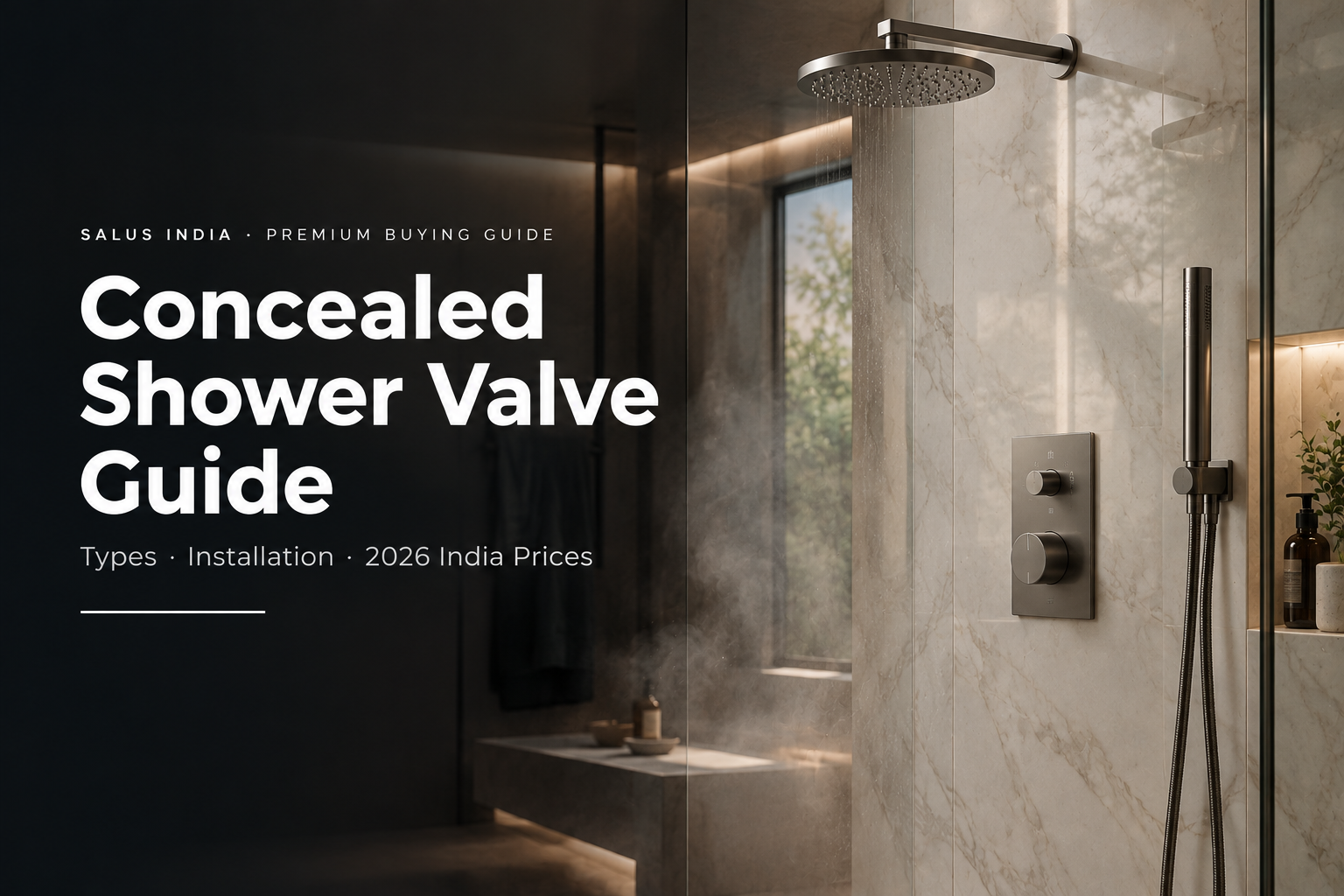
A concealed shower valve is the hidden engine of a premium shower system. Fitted inside the wall before tiling, it controls water flow, temperature, and which outlets receive water, while showing nothing more than a slim control plate and a few trimmed knobs on the finished surface. Every architect-specified shower renovation and most premium hotel bathroom projects in India use them, and demand has grown steadily as homeowners invest more seriously in bathroom quality. This guide explains what a concealed shower valve is, how it works, which type suits your bathroom, and what the full installed cost looks like in 2026.
What Is a Concealed Shower Valve?
A concealed shower valve is a plumbing valve whose body and supply connections sit inside a wall cavity, with only the control trim visible on the finished tile surface. Unlike an exposed shower mixer where the valve body, pipes, and handles all sit on the wall, a concealed valve leaves the surface looking uninterrupted except for the trim plate.
The valve blends hot and cold water to the set temperature and directs it to whichever outlet you select: an overhead rain shower, a hand shower, body jets, or a bathtub spout. A single concealed valve can control up to four separate outlets through an integrated diverter or independent volume controls. Browse our shower and bath accessories to see how concealed valve systems pair with each outlet type.
Concealed vs Exposed Shower Valve
| Feature | Concealed Shower Valve | Exposed Shower Valve |
| Visible components | Trim plate and controls only | Full valve body, pipes, handles on wall |
| Installation stage | Before tiling, rough-in inside wall | After tiling, surface-mounted |
| Wall opening required | Yes, with rough-in box | No |
| Repair access | Needs tile removal in most cases | Straightforward, no wall work |
| Finished appearance | Clean, minimal, premium | Functional, traditional |
| Typical cost (INR, 2026) | ₹15,000 to ₹1,50,000+ | ₹5,000 to ₹50,000 |
Types of Concealed Shower Valves
Manual Concealed Valve
The most common entry point into concealed shower systems. One handle controls temperature, a second controls flow. No electronics, no electricity, and the mechanism is the same ceramic disc principle used in exposed mixers. Manual concealed valves suit bathrooms where water supply temperature is stable, such as homes with a constant-temperature electric geyser.
Thermostatic Concealed Valve
A thermostatic concealed valve adds an internal wax cartridge that locks the water temperature at your set point and holds it even when pressure fluctuates elsewhere in the building. It is the correct choice for Indian homes with solar geysers, shared geysers feeding multiple bathrooms, or older buildings where municipal pressure varies during peak hours. The anti-scald mechanism is an additional benefit, particularly for families with children or elderly members.
Thermostatic Concealed Valve with Integrated Diverter
A combined unit that handles both temperature control and outlet switching from one trim plate. One control sets temperature; the other sends water to the rain shower, hand shower, or body jets. This suits a concealed shower system running two or three outlets from a single wall position without any exposed pipe between them.
| Type | Best For | Anti-Scald | Outlets | INR Range (2026) |
| Manual concealed | Stable geyser temp, tighter budgets | No | 1-2 | ₹15,000 to ₹40,000 |
| Thermostatic concealed | Solar geysers, shared supply lines | Yes | 1-2 | ₹25,000 to ₹80,000 |
| Thermostatic with diverter | Multi-outlet systems | Yes | 2-4 | ₹40,000 to ₹1,50,000 |
How a Concealed Shower Valve Works
The rough-in body, also called the valve body or cartridge housing, sits inside the wall and connects to your hot and cold supply lines. A rough-in box frames the valve body flush with the eventual tile surface so the trim plate sits flat without shimming.
Inside the body, the mixing cartridge blends hot and cold water. On a thermostatic model, a wax element expands and contracts with temperature changes, adjusting the hot port opening to maintain your set temperature automatically. The flow control is separate, turning water on and off without resetting the temperature.
Outlets connect to the valve through ports in the rough-in body. Water travels through concealed supply pipes inside the wall to each outlet position: the overhead rain shower arm, the hand shower bracket, and the body jet nozzles.
Installation Requirements Before You Buy
- Rough-in before tiling. The valve body must be set in the wall before tiles go on. The rough-in depth must match tile thickness so the trim plate sits flush.
- Both hot and cold supply lines must reach the valve position. The valve blends two inputs; a single geyser feed with no cold bypass will not work.
- Minimum 0.5 to 1 bar on both lines. Gravity-fed tanks on upper floors sometimes fall short. Check with your plumber before specifying a thermostatic model.
- Plan outlet positions before the tiler starts. Each outlet connects through internal pipes roughed in at the same stage as the valve body.
- Lock this into your renovation schedule early. Add it to your bathroom renovation planning checklist before plumbing begins, since the valve position determines tile drilling points and outlet heights.
Maintenance in Hard Water Areas
A concealed valve’s main maintenance item is the cartridge. Thermostatic wax cartridges need replacing every five to ten years in Mumbai’s hard water, and the symptom is temperature that drifts rather than holding steady. Descale the trim plate and exposed nozzle faces monthly, and schedule a professional service of the internal cartridge every three to five years. Following a consistent bathroom fittings maintenance routine protects the most expensive fitting in your shower system.
The wellness case for a temperature-stable concealed shower is real. A shower that holds its temperature regardless of what happens elsewhere in the building is the one you actually look forward to using. This daily bathroom wellness guide covers why temperature consistency matters more than most homeowners expect before they install one.
Concealed Shower Valve Price Guide India 2026
| Category | Price (INR) | Notes |
| Entry-level manual concealed | ₹15,000 to ₹30,000 | Chrome trim, single outlet |
| Mid-range thermostatic concealed | ₹30,000 to ₹80,000 | Wax cartridge, two-outlet, brass body |
| Premium thermostatic with diverter | ₹60,000 to ₹1,50,000 | Multi-outlet, PVD finish, imported cartridge |
| Luxury digital or multi-port | ₹1,50,000 to ₹4,00,000+ | Digital display, programmable presets |
Installation adds ₹8,000 to ₹25,000 for valve rough-in, supply pipe runs to outlet positions, and re-tiling. The bathroom hand shower and rain shower outlets that connect to the concealed valve are typically priced separately.
Conclusion
A concealed shower valve is the correct starting point for any premium shower renovation because the entire shower layout flows from how and where the valve is positioned. Get the type right for your water supply, plan the rough-in before tiling, and choose a cartridge built for hard water. Salus India’s imported concealed thermostatic valve range has been curated over 50 years of premium bathroom fitting experience and is available at our Navi Mumbai showroom.
Frequently Asked Questions
Q1. What is a concealed shower valve?
A concealed shower valve is a plumbing valve fitted inside the wall before tiling, with only the control trim plate visible on the finished surface. It blends hot and cold water to your set temperature and directs flow to one or more outlets: a rain shower, hand shower, body jets, or bathtub spout, while keeping all pipework hidden inside the wall.
Q2. What is the difference between a manual and thermostatic concealed valve?
A manual concealed valve requires you to set temperature by feel each time. A thermostatic concealed valve locks in a set temperature automatically and holds it even if pressure changes elsewhere in the building. Thermostatic valves also include an anti-scald stop at roughly 38 to 42 degrees, making them safer for families with children or elderly members.
Q3. Can a concealed shower valve be installed in an existing bathroom?
Yes, but it requires opening the wall to fit the rough-in box, running supply pipes to all outlet positions, and re-tiling. It is significantly simpler and less expensive when planned during a full bathroom renovation before tiling begins rather than as a standalone retrofit.
Q4. How many outlets can a concealed shower valve control?
Most standard thermostatic concealed valves control two outlets, typically a rain shower and a hand shower. Valves with an integrated diverter can switch between or combine up to three or four outlets, including body jets and bathtub spouts, from a single trim plate position.
Q5. What water pressure does a concealed shower valve need?
Most models need at least 0.5 to 1 bar on both hot and cold supply lines. Thermostatic valves also need balanced pressure between the two lines to blend accurately. Top-floor gravity-fed installations often need a booster pump to reach the minimum operating pressure required.
Q6. How much does a concealed shower valve cost in India in 2026?
Manual concealed valves start around ₹15,000 to ₹30,000. Thermostatic concealed valves run ₹30,000 to ₹80,000. Multi-outlet thermostatic systems with integrated diverters cost ₹60,000 to ₹1,50,000. Add ₹8,000 to ₹25,000 for installation and wall work, and price each outlet separately.
Q7. How often does a concealed shower valve cartridge need replacing?
In Mumbai’s hard water, a thermostatic cartridge typically lasts five to ten years before temperature control becomes inconsistent. A manual ceramic disc cartridge lasts ten to fifteen years but can stiffen earlier if mineral buildup is not addressed. Professional servicing every three to five years keeps the valve performing accurately.