

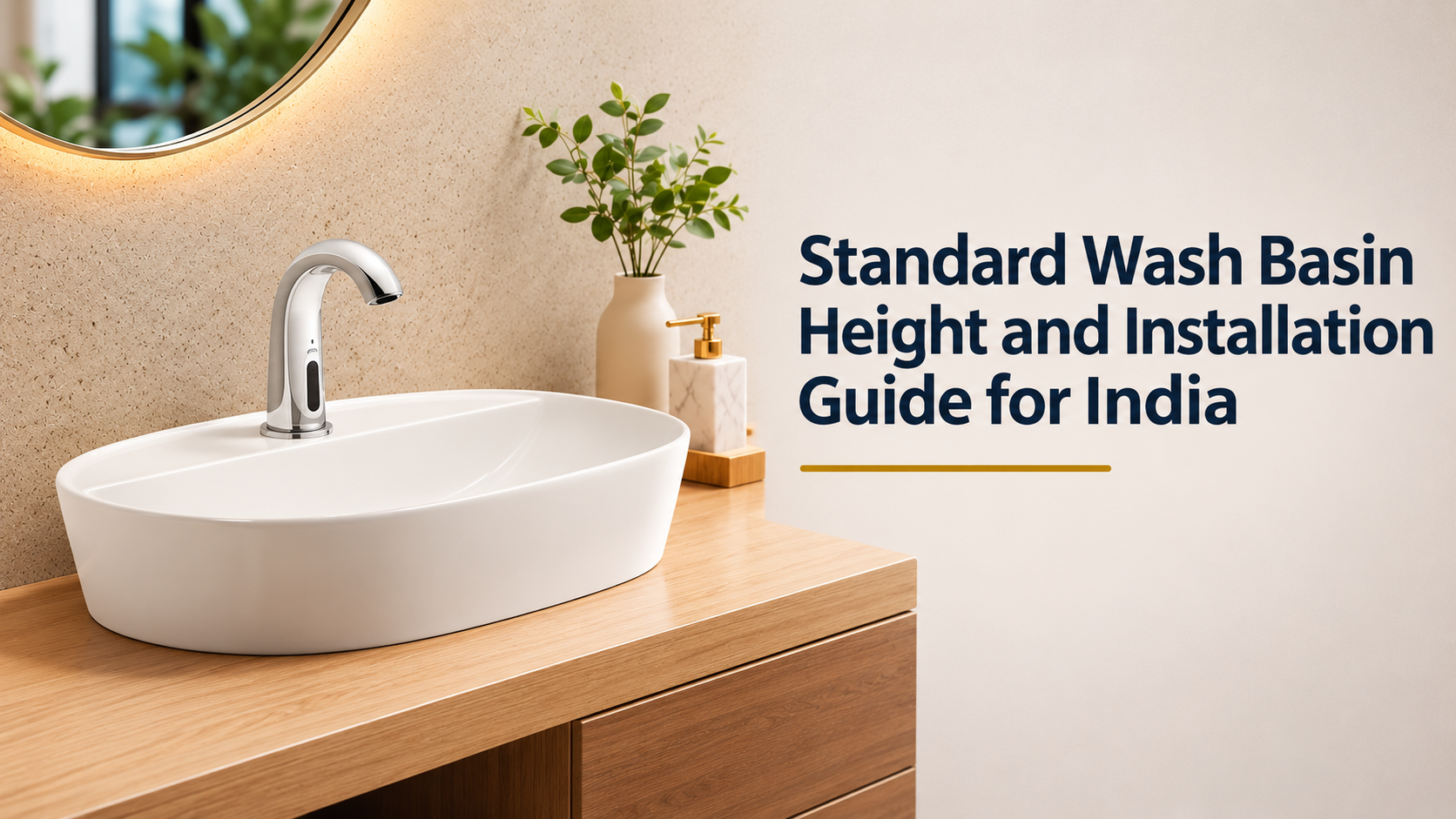
Knowing the standard wash basin height matters, because a basin is used more often than almost any other fitting in the home. You brush your teeth, wash your face and rinse your hands there several times a day. Yet many homeowners discover too late that their basin is too low, too high or poorly fixed to the wall.
Getting it right at the start saves back strain, splashes and rework. In this guide, we explain the standard wash basin height for Indian homes, the right height for different basin types and the key installation steps, so your plumber and tile contractor get it right the first time.
What Is the Standard Wash Basin Height in India?
For most Indian homes, the standard wash basin height puts the top rim between 800 mm and 850 mm (about 31 to 33 inches) above the finished floor. This range suits most adults and lets you wash your face without bending too far.
However, the right height depends on who uses the basin most. A family of tall adults may prefer the upper end of this range, while a home with children or elderly members may choose a slightly lower setting. Always measure from the finished floor level, after tiles are laid, not from the bare slab.
Standard Wash Basin Height by Basin Type
Different basins sit differently on the wall or counter. As a result, the standard wash basin height changes slightly with the type of basin you choose.
| Basin type | Typical rim height from floor | Notes |
| Wall hung basin | 800 to 850 mm | Fixed directly to the wall with bolts |
| Under counter basin | 800 to 850 mm (counter top) | Rim sits below the counter surface |
| Counter top or vessel basin | 800 to 900 mm (bowl rim) | Lower the counter to about 700 to 750 mm |
| Semi-recessed basin | 800 to 850 mm | Part of the bowl sits within the counter |
| Kids’ basin | 600 to 700 mm | Can be raised later with the counter |
| Accessible basin | Around 750 to 800 mm | Needs clear knee space below |
Wall Hung Basins
A wall-hung wash basin is fixed to the wall with rack bolts and has no pedestal or counter below it. It saves floor space and makes cleaning easier. Our guide to the wall hanging wash basin covers its benefits in more detail, and wall-mounted designs such as the Agate show how neat this style looks.
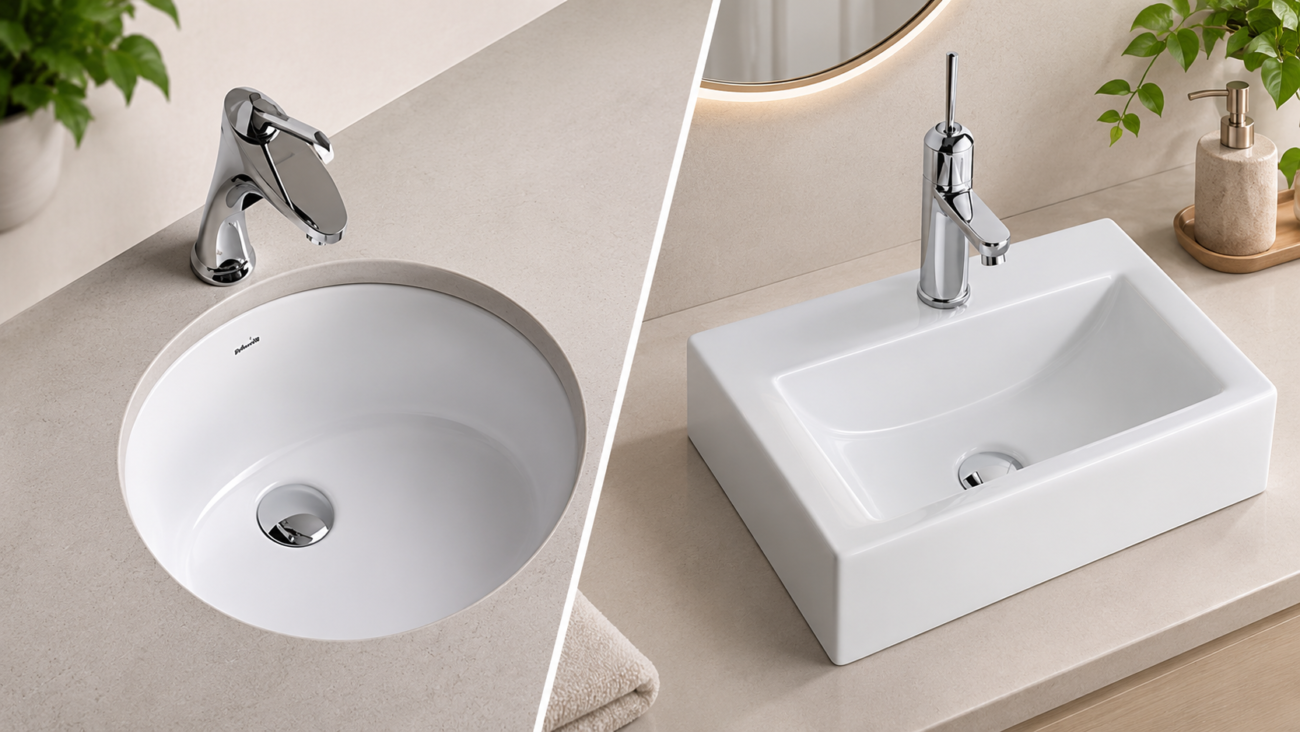
Counter Top and Under Counter Basins
For a counter top or vessel basin, the bowl sits on top of the counter. Because of this, the counter itself should be built lower, so the bowl rim still ends at a comfortable height. In contrast, under-counter wash basins such as the Oval are fixed below the counter, so the counter top height is the working height.
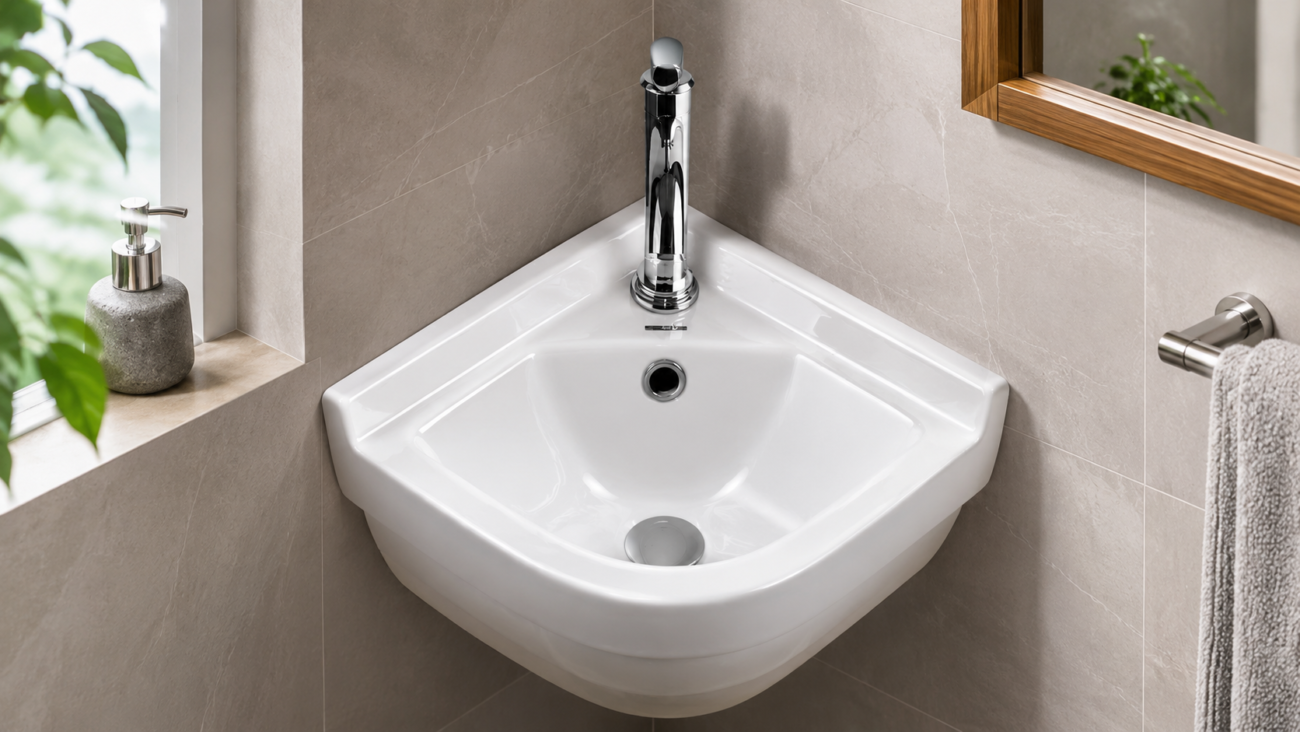
Corner Basins for Small Bathrooms
In compact bathrooms, corner wash basin models use space that would otherwise go unused. The same standard wash basin height of 800 to 850 mm applies. For example, the Angolo Corner wash basin is designed for tight corners in small bathrooms and powder rooms.
Plumbing Points to Plan Before Tiling
The basin height decides where your plumber places the pipes. Plan these points before tiling, because moving them later means breaking tiles.
- Water supply points: the hot and cold inlets with angle valves, such as the Angle Valve (Kingston Series), are usually placed below the basin.
- Waste outlet: the drain point in the wall must line up with the basin waste and the basin bottle trap.
- Tap position: for a wall-mounted mixer, the spout should reach well over the bowl. The Tubo™ Single Lever Wall Mounted Brass Basin Mixer is one example.
- Mirror and lights: leave space above the basin for a mirror, shelf and lighting.
Ask your plumber to mark all points on the wall before tiling.
Step-by-Step Wash Basin Installation
Every basin comes with its own instructions, but most wall-hung basins follow these broad steps:
- Mark the height: draw a level line on the wall at the planned rim height from the finished floor.
- Drill and fix rack bolts: use the correct rack bolts for the basin and a strong wall.
- Fit the waste and tap: attach the waste coupling and bathroom sink taps to the basin before hanging it, where the design allows.
- Hang and level the basin: place the basin on the bolts, check it is level and tighten evenly.
- Connect the bottle trap: fix the bottle trap fitting between the basin waste and the wall drain.
- Seal and test: apply silicone along the wall joint, then run water for a few minutes and check every joint for leaks.
A quality trap keeps odours out and makes cleaning easy. Salus offers options such as the P-Trap.
Common Installation Mistakes to Avoid
Watch out for these common errors:
- Fixing a heavy basin to a weak or hollow wall without support.
- Placing the drain point too high or too low for the bottle trap.
- Skipping the silicone seal, which lets water seep behind the basin.
Frequently Asked Questions
What is the standard wash basin height from the floor in India?
The standard wash basin height places the rim between 800 mm and 850 mm from the finished floor. This suits most adults in Indian homes.
What height should a countertop basin be?
The bowl rim of a countertop basin should end at a comfortable height, around 800 to 900 mm. To achieve this, the counter itself is usually built lower, at about 700 to 750 mm.
What is a good height for a kids’ wash basin?
A kids’ basin is often fitted between 600 mm and 700 mm. Some families use a sturdy step stool instead, so the basin stays at adult height.
How do I choose a face wash basin for a small bathroom?
Choose a compact wall-hung or corner basin. These save floor space and make the bathroom feel larger, while still giving enough room to wash your face comfortably.
Can a wall-hung basin take heavy weight?
A properly fixed basin on a solid wall is stable for daily use. However, it is not designed for leaning or sitting, so avoid putting heavy weight on it.
Get the Height Right from Day One
A well-placed basin feels natural every time you use it. By following the standard wash basin height, adjusting it for your family, planning plumbing points before tiling and following careful installation steps, you avoid splashes, leaks and back strain for years to come.
As one of the experienced wash basin suppliers in western India, Salus offers wall-mounted, under-counter, countertop and corner basins, along with matching bathroom tap fittings and bathroom sanitary fittings.
Planning a new bathroom? Explore the full range at salusindia.com and contact our team today for product guidance and installation support.