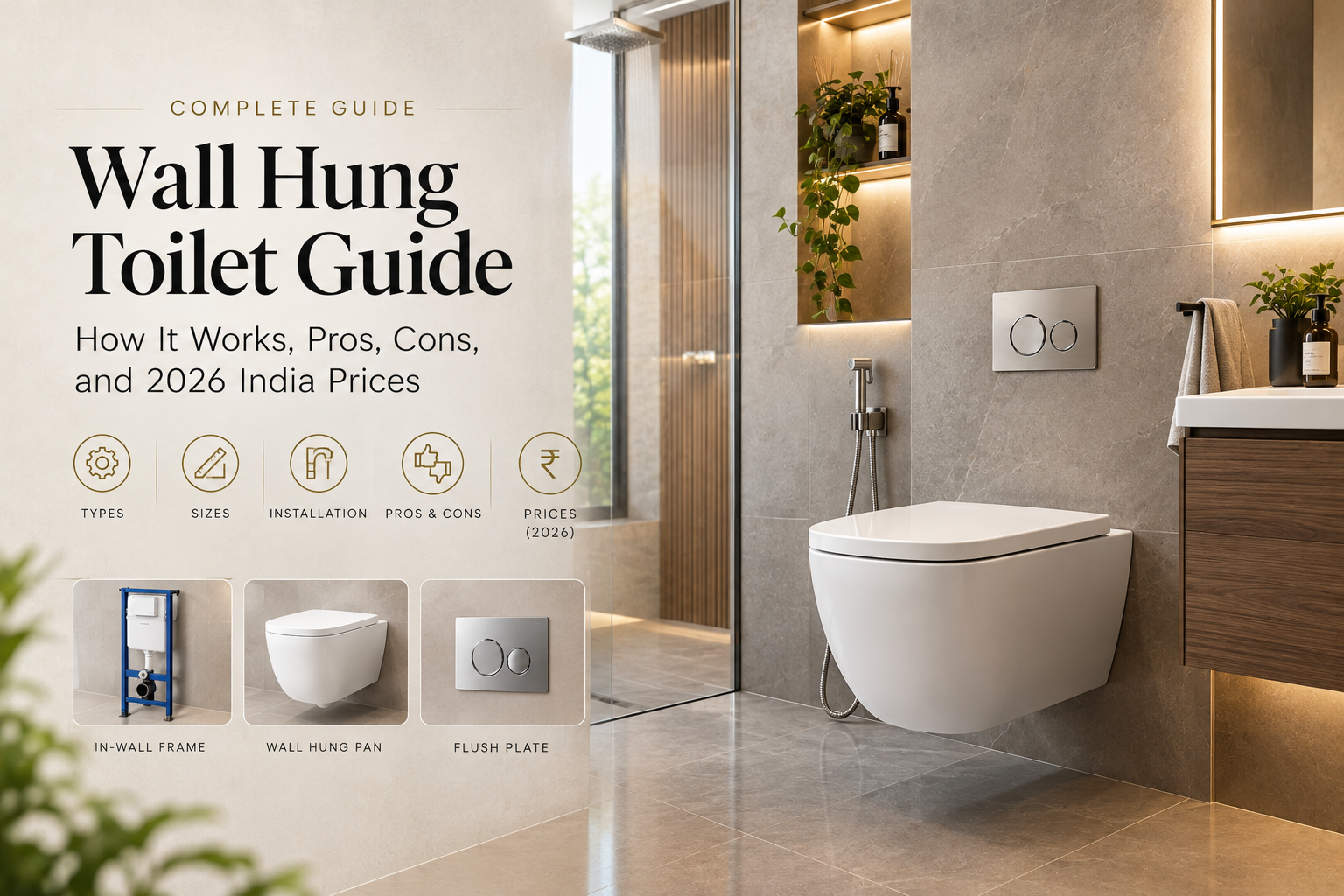
Wall hung toilets have become the most visible sign of a premium bathroom renovation in Indian homes over the last decade. Suspended off the floor with the cistern hidden inside the wall, they look like they belong in a European hotel bathroom rather than an Indian apartment. The floor stays clear, cleaning takes seconds instead of minutes, and the bathroom reads larger. But the installation requires more upfront planning than a standard floor-mounted toilet, and the hidden cistern adds a question most buyers ask too late: what happens if it needs servicing? This guide answers that and every other practical question about wall hung toilets, from how the flush system works to what the full installed cost looks like in India in 2026.
What Is a Wall Hung Toilet?
A wall hung toilet, also called a wall-mounted toilet or suspended toilet, is a WC pan that attaches to a structural steel frame embedded inside the wall, with no part of the toilet touching the floor. The water supply and the cistern, called a concealed cistern or in-wall cistern, sit inside the wall cavity behind a section of wall tile or a cladded panel. Only the toilet pan, the flush actuator plate, and the seat are visible on the finished surface.
The pan connects to the in-wall frame through two bolts and to the concealed waste pipe through a concealed collar. Browse Salus India’s wall hung toilet range to see pan designs and frame system options for different installation depths.
How a Wall Hung Toilet Works
The in-wall frame, sometimes called a carrier frame, is a steel structure that bolts to the floor and screws to the structural wall. It carries the full weight of the pan and the user, up to 400 kg on a quality frame.
The cistern sits inside the frame. Cold water enters through a supply line at the base. The fill valve maintains the cistern water level after each flush. When the user presses the flush actuator plate on the finished wall surface, a button mechanism inside activates the flush valve, releasing water from the cistern into the pan through a concealed connection.
The waste pipe from the pan connects through the wall frame to the building’s soil stack, typically through a horizontal or downward-angled run concealed in the floor slab or wall. This connection point must be planned before any walls are built or tiled.
Wall Hung vs Floor-Mounted Toilet: At a Glance
| Feature | Wall Hung Toilet | Floor-Mounted Toilet |
| Floor contact | None | Full base on floor |
| Cleaning | Mop under freely, no base gaps | Base edges collect soil |
| Space perception | Floor visible, bathroom reads larger | Base breaks floor sightline |
| Installation complexity | High, requires frame roughed-in before tiling | Standard, installs on finished floor |
| Cistern location | Concealed inside wall | Exposed behind pan or close-coupled |
| Servicing access | Via removable actuator plate panel | Straightforward, all components visible |
| Height adjustable | Yes, set during installation | No |
| Typical cost with installation | ₹35,000 to ₹1,50,000 | ₹8,000 to ₹50,000 |
Advantages of a Wall Hung Toilet
Floor-to-ceiling visual space. The floor reads as continuous from wall to wall. In a bathroom under 5 sqm, this makes a meaningful perceptual difference to how large the space feels.
Cleaning speed. There is no base, no junction between the toilet base and the floor tile, no hidden surface for bacteria and soil to accumulate. Mopping under the toilet takes two seconds.
Height adjustment. The pan height is set during installation. Standard height is 400 to 420 mm seat height, but the frame allows adjustment to 380 to 460 mm. This matters for tall users and for households with elderly members who benefit from a higher seat position.
Flush efficiency. Most concealed cistern systems use a dual-flush mechanism: a full flush at 6 litres and a reduced flush at 3 litres. This is more efficient than the 10 to 12 litre flushes of older close-coupled toilets, a meaningful reduction in a city where water usage matters.
Limitations to Know Before Buying
Frame and plumbing must go in before tiling. This is the constraint that makes wall hung toilets a renovation decision, not a swap decision. Once the bathroom is tiled, retrofitting a wall hung toilet means breaking open a section of wall, setting the frame and concealed cistern, replumbing the waste outlet, and retiling. Plan it into your bathroom renovation checklist at the earliest stage.
The cistern is inside the wall. Cistern servicing requires removing the actuator plate and accessing the internals through the flush plate opening. Most quality frames provide adequate access for fill valve and flush valve replacement without breaking tiles.
Water pressure requirement. The concealed cistern fill valve needs a minimum of 0.5 to 1 bar of water pressure to fill reliably. Top-floor units with gravity-fed tanks may need a booster pump.
In-Wall Frame: The Critical Component
The frame is not an accessory to the toilet; it is the structural system the toilet depends on. A substandard frame can flex under load, causing the pan connection to loosen over time and eventually leak. Confirm that the frame you specify:
- Has a steel structure, not aluminium
- Is rated for at least 400 kg load
- Includes adjustable feet for floor levelling
- Has a serviceable cistern accessible without tile removal
Browse our bath and shower accessories alongside the wall hung toilet selection to coordinate flush actuator plate finish with other visible bathroom hardware.
Installation Cost Breakdown India 2026
| Item | Cost (INR) |
| Wall hung toilet pan | ₹15,000 to ₹60,000 |
| In-wall frame with concealed cistern | ₹12,000 to ₹40,000 |
| Toilet seat (often sold separately) | ₹3,000 to ₹15,000 |
| Flush actuator plate | ₹2,000 to ₹10,000 |
| Plumber: frame installation, waste roughing-in | ₹8,000 to ₹20,000 |
| Civil: wall boarding or tiling over frame | ₹5,000 to ₹15,000 |
| Total installed range | ₹45,000 to ₹1,60,000 |
Maintenance and Hard Water Care
The concealed cistern itself rarely needs maintenance if the fill and flush valves are good quality. The toilet pan surface requires the same care as any ceramic surface: wipe with a non-abrasive cleaner, avoid bleach-heavy toilet blocks that accelerate staining at the waterline, and descale the rim holes at the top of the bowl if water pressure drops during the flush cycle. Following a bathroom fittings maintenance routine that includes periodic cistern valve checks keeps the flush system performing reliably. A bathroom that functions without any thought every morning is the foundation of the daily wellness rituals that make a real difference.
Conclusion
A wall hung toilet is worth the installation complexity for any serious bathroom renovation. The floor-level visual clarity, the cleaning speed, and the adjustable height justify the cost over a standard toilet for most homeowners making a once-in-ten-year bathroom investment. Plan the frame and waste roughing-in at the earliest renovation stage, choose a quality steel frame, and confirm cistern access before the wall closes. Salus India’s wall hung toilet range has been curated for Indian installation conditions, water pressure ranges, and the Mumbai hard water reality.
Frequently Asked Questions
Q1. What is a wall hung toilet and how is it different from a normal toilet?
A wall hung toilet mounts to a steel frame inside the wall, with no part of the pan touching the floor. The cistern is concealed inside the wall cavity. A normal floor-mounted toilet has its pan sitting directly on the floor with a visible or close-coupled cistern. The wall hung version gives a cleaner look, clears the floor, and allows height adjustment, but requires frame installation before tiling.
Q2. Is a wall hung toilet stronger than a floor-mounted toilet?
Yes, if a quality steel frame is used. A properly installed wall hung toilet frame is rated to hold 400 kg or more, significantly more than the average user load. The risk comes from cheap frames that flex or corrode over time. Choose a frame from a reputable manufacturer with an explicit load rating.
Q3. Can a wall hung toilet be installed in an existing bathroom without renovation?
Not easily. The frame and concealed cistern must be roughed in before the wall is built or tiled. Retrofitting in a finished bathroom means breaking open a wall section, installing the frame, replumbing the waste connection, and retiling. It is structurally possible but expensive. Most wall hung toilet installations happen during full bathroom renovations.
Q4. How do you service a wall hung toilet cistern if it is inside the wall?
The flush actuator plate on the wall surface is removable. Behind it is an access point sized to allow removal and replacement of the fill valve and flush valve without breaking tiles. Quality frames are designed with this access in mind. Check that the frame you specify has a proper service access design before installation.
Q5. What height should a wall hung toilet be installed at?
The standard installation height for a wall hung toilet is 400 to 420 mm from finished floor to the top of the toilet seat. The frame allows adjustment from approximately 380 to 460 mm, set during installation before the wall is closed. Taller users are more comfortable at 420 to 440 mm.
Q6. How much does a wall hung toilet cost in India in 2026?
A wall hung toilet pan costs ₹15,000 to ₹60,000. The in-wall frame with concealed cistern adds ₹12,000 to ₹40,000. The toilet seat, actuator plate, and installation bring the total installed cost to ₹45,000 to ₹1,60,000 depending on product quality and civil work scope.
Q7. Do wall hung toilets need more water pressure to flush?
The concealed cistern fill valve needs 0.5 to 1 bar of water supply pressure to refill reliably after each flush. The flush itself does not need high pressure since water falls from the cistern by gravity. Apartments on upper floors with gravity-fed overhead tanks sometimes run below this threshold and may need a small booster pump on the supply line.