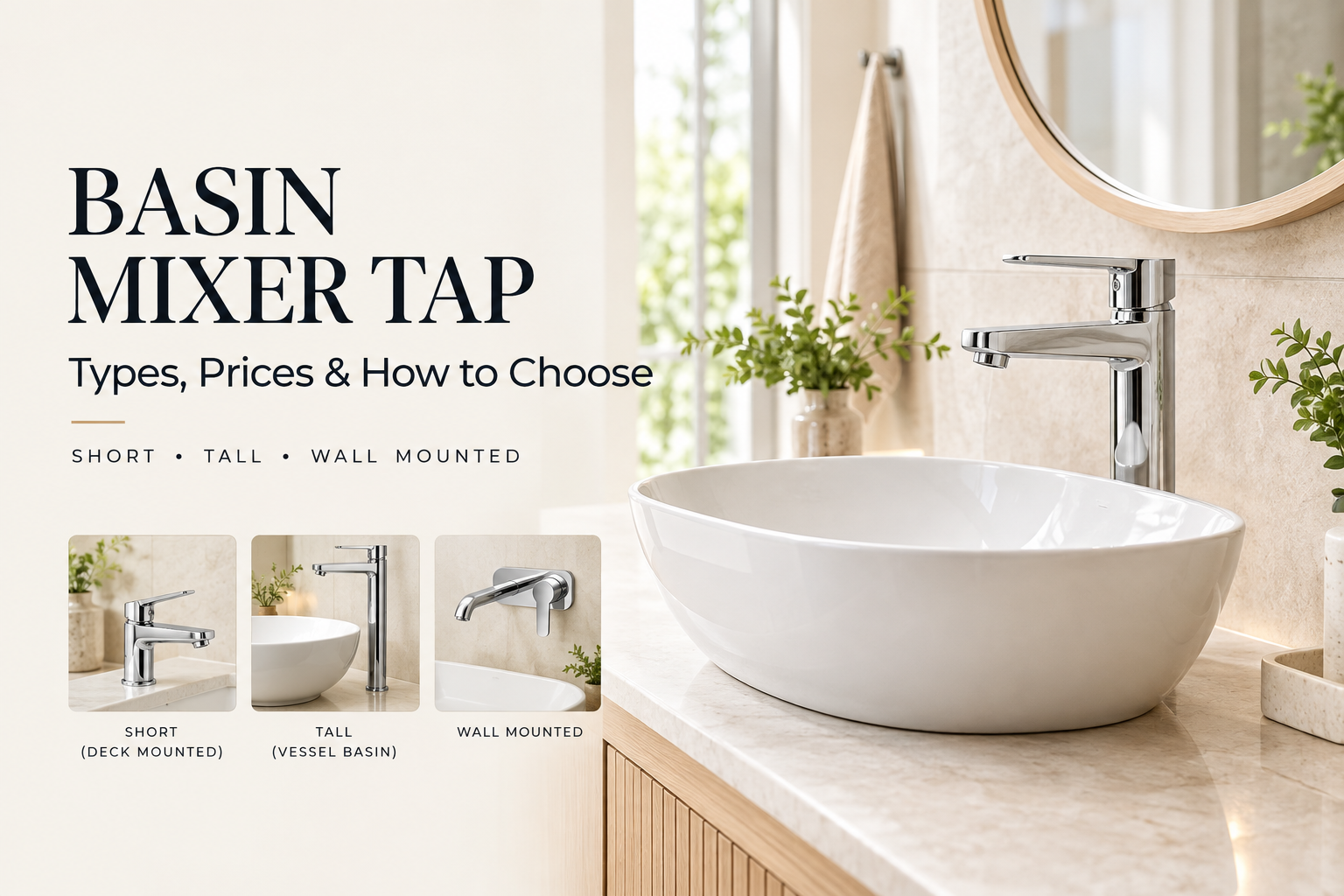
Choosing a basin mixer tap is one of the most consequential small decisions in a bathroom renovation. It sits at the centre of the counter, gets touched dozens of times a day, and either matches your basin perfectly or looks wrong for the next ten years. Salus India has spent 50 years fitting basin mixer taps into Indian bathrooms, from compact Navi Mumbai apartments to full villa renovations, and this guide covers everything you need before you buy one.
What Is a Basin Mixer Tap?
A basin mixer tap is a single-lever or single-body fitting that blends hot and cold water through one spout, controlled by one handle. Unlike older two-tap setups, a basin mixer tap gives you precise temperature and flow control with one hand, which matters in a small Indian bathroom where counter space is limited. It connects to the water supply through a single hole in the basin or wall, using the BSP 1/2 inch standard found in almost every Indian plumbing system.
Most basin mixer taps sold in India today use a ceramic disc cartridge inside the handle. This cartridge is what opens and closes the water flow when you turn the lever, and its quality decides how long the tap lasts before it starts dripping or feels stiff.
Basin Mixer vs Pillar Tap: What’s the Difference
This is the first question most homeowners ask when they compare basin mixer vs pillar tap options at a showroom. A pillar tap is the traditional two-tap setup, one for hot water and one for cold, each with its own handle and spout. You mix the temperature by adjusting both taps together, which takes longer and needs two holes drilled into the basin.
A basin mixer tap replaces both pillar taps with one fitting. It needs only one tap hole (or none, for wall-mounted versions), gives single-handle temperature control, and looks cleaner on a modern basin. Pillar taps are cheaper and still common in budget bathrooms or older basin designs with two pre-drilled holes. If you are renovating and choosing new fittings, a basin mixer tap is almost always the better long-term choice for convenience and looks, though a basin with only two existing holes will need pillar taps unless you also replace the basin. Our wash basin range includes single-hole basins designed specifically for mixer taps.
Types of Basin Mixer Taps
There are three basic body styles, and picking the wrong one is the single most common mistake in bathroom renovations.
Short or Deck-Mounted Basin Mixer
This is the standard basin mixer, sitting directly on the basin deck or counter with a spout height of roughly 10 to 15 cm. It suits basins with a flat deck area or a counter-mounted vessel basin where the tap sits beside, not inside, the bowl. It is the most economical and widely stocked type.
Tall Basin Mixer
A tall basin mixer raises the spout to 25 to 35 cm or more, built for deep vessel basins, above-counter bowl basins, or designer basins where a short spout would sit too close to the water surface and cause splashing. If your basin has a raised bowl sitting on top of the counter rather than set into it, a tall basin mixer is usually the correct choice, not the standard short one.
Wall-Mounted Basin Mixer
A wall mounted basin mixer is fitted into the wall above the basin instead of on the counter or basin deck. Pipework runs inside the wall, leaving the counter completely clear. This suits narrow console basins, floating basins with no deck space, and compact bathrooms where every centimetre of counter matters. It needs concealed plumbing planned before tiling, so it is a decision to make early in a renovation, not after the basin is already fitted.
| Feature | Short/Deck-Mounted | Tall Basin Mixer | Wall-Mounted |
| Best for | Flat-deck basins, budget bathrooms | Vessel/above-counter basins | Console/floating basins |
| Spout height | 10-15 cm | 25-35 cm | Adjustable, set at install |
| Installation | Simple, single hole | Simple, single hole | Concealed, pre-tiling planning needed |
| Counter space used | Minimal | Minimal | None |
| Typical price (2026) | Lower | Mid to high | Highest |
How to Choose Based on Basin Type and Layout
Match the tap to the basin, not the other way round. A flat-deck basin needs a short mixer; a raised vessel basin needs a tall basin mixer, or the spout sits too low and splashes water outside the bowl. A console or floating basin with no deck usually calls for a wall-mounted basin mixer. In a compact apartment bathroom, check the swing radius of the handle against the wall or mirror behind it before finalising your pick. Our bathroom tap fittings guide walks through basin-to-tap matching in more detail, and our bathroom renovation checklist covers the sequence of decisions, since tap type affects both plumbing and tiling plans.
Cartridge Quality: Why Ceramic Disc Matters
Every basin mixer tap worth buying uses a ceramic disc cartridge rather than the older rubber washer mechanism. Ceramic discs seal by rotating two hardened surfaces against each other, rated for 500,000 or more open-close cycles without wearing out. This is the part that determines whether your tap still works smoothly in five years or starts dripping within one. When comparing tap fittings for your renovation, browse our bathroom faucets and taps range, where every basin mixer uses a certified ceramic disc cartridge as standard.
Finishes: Chrome, Matte Black, Brushed Gold, and PVD
Chrome remains the most popular finish for Indian bathrooms because it is affordable, easy to clean, and pairs with any basin colour. Matte black has become the leading choice for a contemporary look, especially against white or concrete-toned basins. Brushed gold suits premium and traditional interiors that want warmth without high shine. PVD, or physical vapour deposition, is a coating process that bonds finish to brass at a molecular level, making it far more scratch and tarnish resistant than standard plating, which matters for finishes like matte black and gold that show wear more visibly than chrome.
Hard Water and Maintenance
Mumbai and Navi Mumbai water carries moderate to high mineral content, which leaves limescale deposits inside cartridges and around aerators over time. A basin mixer tap with a solid brass body and a genuine ceramic disc cartridge resists this far better than a budget zinc-alloy tap, but no tap is maintenance-free in hard water areas. Wiping the spout dry after use, descaling the aerator every two to three months with a mild vinegar soak, and avoiding harsh abrasive cleaners on finished surfaces will extend the life of any basin mixer tap considerably. For a fuller routine, this bathroom fittings maintenance routine covers descaling and annual checks in detail, and a well-maintained bathroom does more than look good. As this piece on how your bathroom can boost daily wellness explains, small daily rituals in a functioning, pleasant bathroom genuinely affect mood and routine.
Basin Mixer Tap Price Guide India (2026)
Basin mixer tap price India varies mainly by body material, cartridge quality, and finish. Entry-level zinc-alloy short mixers with basic chrome finish start around ₹2,500 to ₹4,000. Solid brass short mixers with ceramic disc cartridges and chrome or matte finishes range from ₹4,500 to ₹9,000. Tall basin mixers in brass with premium finishes typically run ₹8,000 to ₹16,000, reflecting the additional body length and material. Wall-mounted basin mixers, including the concealed body and trim kit, generally cost ₹12,000 to ₹25,000 or more for imported or designer ranges. Prices shift with brass grade, PVD coating, and import duty, so always confirm current pricing with your showroom before finalising a renovation budget.
Conclusion
A basin mixer tap is not a fitting to choose in a hurry. Get the body type right for your basin, insist on a solid brass body with a ceramic disc cartridge, and pick a finish that will still look right in ten years, not just in the showroom light. Salus India’s 50 years of curating imported bathroom fittings ranges means every basin mixer tap in our Navi Mumbai showroom has already been filtered for exactly this kind of durability and fit before it reaches you.
Frequently Asked Questions
Q1. What is the difference between a basin mixer tap and a pillar tap?
A basin mixer tap uses one lever and one spout to control both hot and cold water through a single hole, while a pillar tap uses two separate taps with individual handles for hot and cold. Mixers need less counter space, install through one hole, and give faster, more precise temperature control than pillar taps.
Q2. Why is my basin mixer tap too short for the basin?
This usually happens when a short deck-mounted mixer is fitted to a raised vessel or above-counter basin. The spout sits too close to the bowl’s rim and water splashes outward. The fix is switching to a tall basin mixer sized for vessel basins, matched to the basin height before installation, not after.
Q3. Why is my basin mixer leaking from the base or handle?
Leaking usually points to a worn ceramic disc cartridge, a loose mounting nut, or limescale buildup preventing a clean seal in hard water areas. Most leaks are fixed by replacing the cartridge rather than the whole tap. Persistent leaks despite a new cartridge suggest the tap body itself needs replacement.
Q4. Can I install a wall-mounted basin mixer in an existing bathroom?
Yes, but it requires opening the wall to run concealed pipework to the correct height, then re-tiling around the fitting. It is far simpler and cheaper during a full renovation before tiling is finished than as a standalone retrofit afterward.
Q5. Which basin mixer tap finish suits hard water areas like Mumbai best?
Chrome and PVD-coated finishes handle hard water best because they resist visible limescale spotting and are easiest to wipe clean daily. Matte finishes can show mineral spots more visibly and need slightly more frequent cleaning to stay looking new.
Q6. Is a single-hole basin mixer tap compatible with any wash basin?
Only basins with a single pre-drilled tap hole, or vessel basins with no hole at all, suit a mixer tap directly. Basins drilled for two separate pillar taps need either a deck plate adapter or basin replacement to fit a single-lever mixer cleanly.
Q7. How long does a good basin mixer tap last in an Indian bathroom?
A solid brass basin mixer tap with a genuine ceramic disc cartridge typically lasts 10 to 15 years with basic maintenance, even in hard water regions. Budget zinc-alloy taps or low-grade cartridges often need cartridge replacement or full tap change within 3 to 5 years.