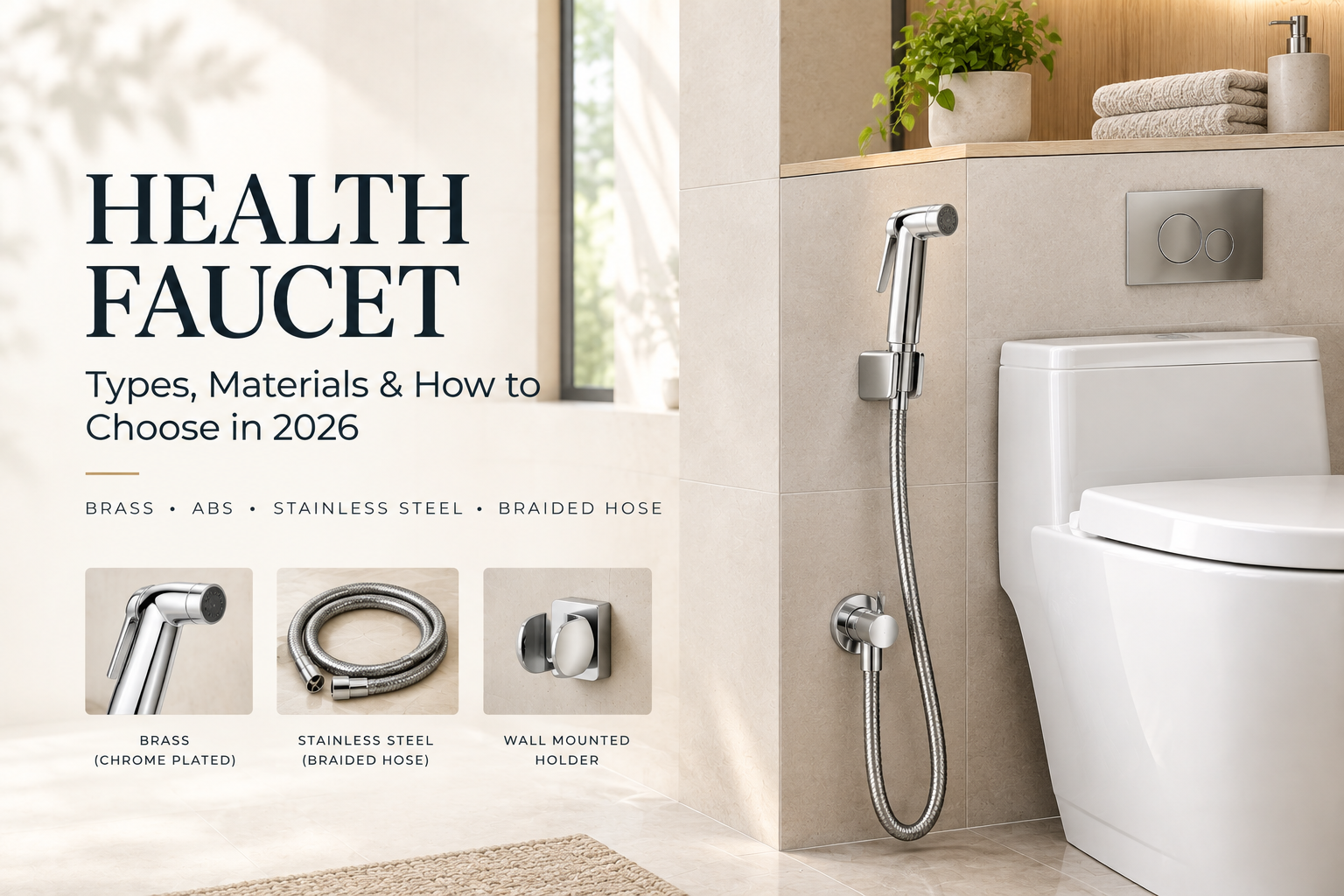
Walk into almost any Indian bathroom and you’ll find a fitting western homes rarely have: the health faucet. Replacing a leaky old one, or fitting out a bathroom from scratch? Picking the right health faucet saves money and repeat plumber visits. This guide covers the types, materials, hose options, and 2026 prices you need before you buy.
What Is a Health Faucet?
A health faucet is the handheld spray unit mounted near the toilet, connected to the water line through a flexible hose. It’s what most of the world calls a bidet spray. Press the trigger and water comes out in a controlled jet for cleaning after using the toilet.
It’s not a luxury add-on. Indian plumbing treats it as a base fitting, the same way a wash basin tap is. Most fittings use the BSP 1/2 inch thread standard, so a replacement unit from almost any brand screws onto your existing wall outlet without a plumber redoing the pipework.
Why Every Indian Bathroom Has One
A health faucet for bathroom use, sometimes searched as a bidet spray bathroom fitting, isn’t optional in most Indian homes, it’s assumed.
Water-based cleaning has been the norm in Indian households for generations, long before toilet paper became common in urban India. That habit didn’t disappear with modern plumbing, it just moved from a mug and bucket to a proper spray fitting.
There’s a practical health angle too. Water cleaning is gentler on skin than paper and works better for people with piles, post-surgery recovery, or general hygiene sensitivity. A well-designed bathroom does more than look good, it supports daily comfort, and this is one of those small fittings that makes a real difference. Here’s a good read on how your bathroom can boost daily wellness.
Planning a full bathroom overhaul? Browse our bathroom faucets and taps range alongside your health faucet purchase, since matching finishes across the basin tap, shower, and health faucet gives the room a finished look instead of a mismatched one.
Types of Health Faucets
Health faucets come in four common configurations. The right one depends on your wall layout and whether you’re renovating or fitting a new bathroom.
Wall-mounted with hook: The most common type in Indian homes. A hook or holder is fixed to the wall, and the spray gun rests in it between uses. Easy to install, easy to replace.
Floor-mounted: The spray sits in a floor-based holder near the commode instead of the wall. Useful when wall space is tight or the toilet sits away from a side wall.
Concealed: The pipe and valve sit inside the wall, only the spray gun and a slim wall plate show. Looks cleaner, but any leak inside the wall means breaking tile to fix it.
With stop valve: A shutoff valve built into the fitting lets you isolate the health faucet’s water supply without turning off the whole bathroom’s line. Worth the extra cost for easy maintenance later.
| Type | Installation | Looks | Maintenance | Best For |
| Wall-mounted with hook | Simple, no wall-breaking | Standard, hose visible | Easy, fully accessible | Most homes, budget renovations |
| Concealed | Needs wall chasing during construction | Clean, minimal | Hard, requires tile removal for leaks | New construction, premium bathrooms |
| Floor-mounted | Simple, floor fixture only | Neat near commode | Easy | Tight wall space, specific layouts |
Health Faucet Materials: Brass vs ABS vs Stainless Steel
The spray gun and wall hook come in three materials, and this is where most buyers get it wrong by choosing on looks alone.
Brass bodies, usually chrome-plated, last the longest and handle hard water better than the alternatives. They’re heavier, which helps, since a lightweight faucet feels flimsy within a year. Salus India’s curated imported ranges lean toward solid brass construction for this reason.
ABS plastic is common in budget faucets. It’s fine for low-use guest bathrooms, but the plating tends to peel or fade within two to three years, especially with Mumbai’s hard water.
Stainless steel sits in between. It resists corrosion and doesn’t need plating, so there’s no peeling risk, but finish options are more limited than chrome-plated brass.
Hose Types: Braided vs Plain PVC
The hose connecting the spray gun to the wall is the part that fails first, so don’t skimp here even if you spend well on the gun.
Plain PVC hoses are cheap and kink easily. A kinked hose restricts water flow and eventually cracks at the bend point, usually where you’ll see the first leak.
Braided stainless steel hoses cost more but resist kinking almost entirely, handle higher pressure, and last significantly longer under daily use. If your budget allows one upgrade over a base kit, make it the hose, not the gun finish. Anti-kink braided hoses with a reinforced core are worth the extra few hundred rupees if kids use the bathroom, since they tend to pull and drop the gun more than adults do.
How to Choose the Best Health Faucet for Your Bathroom
Water pressure matters more than the brand name. If your building has low-pressure supply, look for a wider nozzle opening, since narrow multi-jet nozzles need higher pressure to work properly.
Hose length should match your bathroom size. A standard 1-meter hose works for compact bathrooms, but if your commode sits far from the wall outlet, get a 1.2 to 1.5 meter hose so you’re not stretching it taut every use.
Spray pattern comes down to preference. Single-jet designs give a stronger, more direct stream. Multi-jet or shower-style heads spread water wider but need decent pressure to feel effective, so test the pattern at a showroom if you can.
Check the thread size before buying a replacement. Almost everything in India runs on BSP 1/2 inch, but confirm your wall outlet first to avoid an adapter hassle.
Installation Steps
- Shut off the water supply, or the health faucet line if a stop valve exists.
- Remove the old wall nipple or outlet cap and check the thread for damage.
- Wrap PTFE (Teflon) tape clockwise around the threaded outlet, three to four turns.
- Screw on the new wall flange or angle valve by hand, then tighten with a wrench, but don’t overtighten, it can crack the flange.
- Connect the hose to the wall valve, then to the spray gun, hand-tight plus a quarter turn with a wrench.
- Turn the water back on and check every joint for drips before calling it done.
Most plumbers finish a wall-mounted swap in 20 to 30 minutes. Concealed installations take longer and should happen during renovation, not after tiling. Planning the whole bathroom at once? Our bathroom renovation checklist walks through the sequence so fittings like this get scheduled at the right stage.
Hard Water Care and Descaling
Mumbai and much of the MMR deal with moderately hard water, and mineral buildup kills faucets early, not daily use. Limescale collects inside the nozzle holes first, usually why pressure drops before anything else goes wrong.
Soak the spray head in a mild descaling solution, diluted white vinegar works fine, once every two to three months. Wipe the body dry after each clean instead of letting water spots etch the finish over time. For a full seasonal routine covering your other fittings too, this bathroom fittings maintenance routine is a solid reference to keep on hand.
Updating fittings across the bathroom? Check our bathroom tap fittings guide and wash basin range together, since matching maintenance schedules across all your chrome fittings keeps the room looking newer for longer.
Health Faucet Price in India (2026)
Entry-level ABS kits (gun, hose, wall hook) start around ₹250 to ₹500, suited to rentals or low-use bathrooms.
Mid-range chrome-plated brass kits with a braided hose typically run ₹800 to ₹1,800, ideal for a primary bathroom.
Premium imported ranges, solid brass, designer finishes, anti-kink hoses, stop-valve options, sit between ₹2,000 and ₹5,000. Concealed systems cost more, often ₹3,000 upward before installation, since they need a separate body plus wall plate.
Conclusion
A health faucet looks like a small fitting, but the wrong choice means leaks, low pressure, and a replacement within a year. Stick with brass over ABS, braided hose over plain PVC, and match the type to your actual layout rather than what looks trendy. Get the descaling routine right from day one and it’ll outlast most other fittings in your bathroom. Visit Salus India’s Navi Mumbai showroom or browse our curated range online to see the difference a properly built health faucet makes.
Frequently Asked Questions
Q1. Why is my health faucet leaking from the base?
Base leaks usually come from worn PTFE tape at the wall joint or a cracked O-ring inside the gun handle. Turn off the supply, unscrew the connection, rewrap fresh Teflon tape, and reassemble. If the gun body is cracked near the trigger, replace the unit instead of patching it.
Q2. Why does my health faucet have low pressure?
Low pressure is almost always limescale blocking the nozzle holes or a kinked hose restricting flow. Soak the spray head in descaling solution first. If that doesn’t help, check the hose for bends or a partially closed stop valve upstream.
Q3. What size health faucet fits Indian bathrooms?
Nearly all Indian health faucets use the BSP 1/2 inch thread standard for the wall connection. Always confirm your existing outlet size before ordering a replacement, since a mismatch means you’ll need an adapter fitting.
Q4. Is brass or ABS better for a health faucet?
Brass, especially chrome-plated brass, lasts longer and handles hard water better than ABS. ABS suits guest bathrooms with light use, but it tends to fade or peel within two to three years in most Indian water conditions.
Q5. Can I install a health faucet myself?
A wall-mounted swap with an existing outlet is manageable DIY work with basic tools and Teflon tape. Concealed installations, or any job needing new pipework inside the wall, need a plumber since mistakes there mean breaking tiles later.
Q6. How often should I clean my health faucet?
Wipe the body after each use to prevent water spotting, and descale the spray head every two to three months in a hard water area like Mumbai. This single habit prevents most pressure and leak complaints.
Q7. What is the best health faucet in India for hard water areas?
Solid brass, chrome-plated units with a braided steel hose handle hard water best, since brass resists mineral corrosion better than ABS, and braided hoses don’t degrade from scale the way plain PVC does over time.